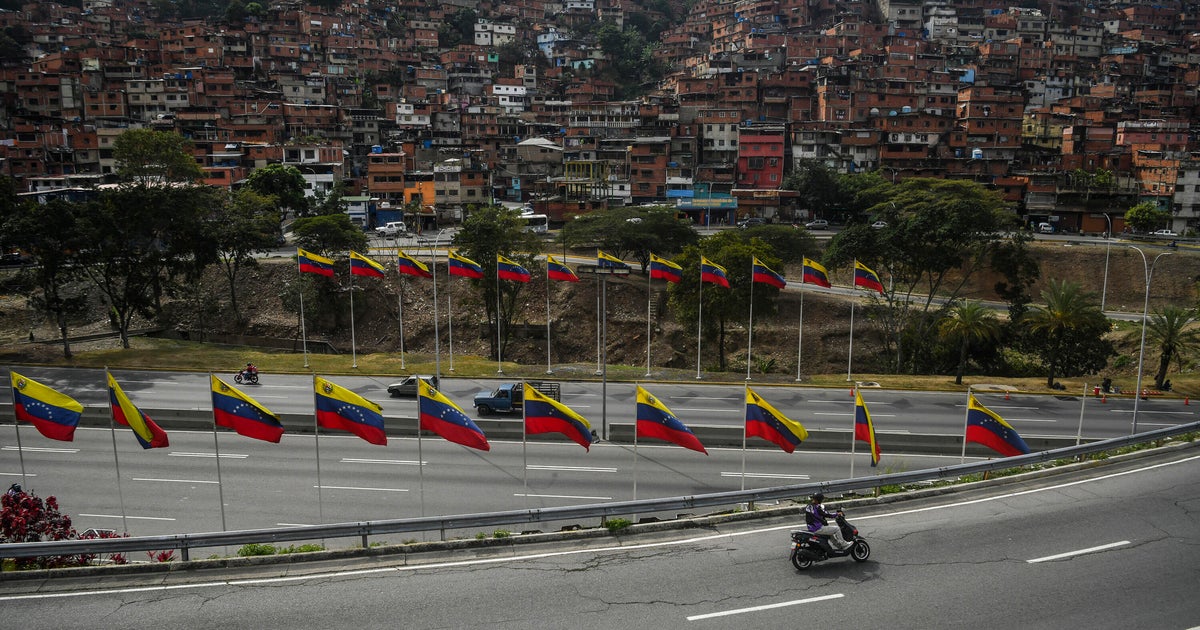
The US strike in Venezuela is targeting the country’s oil reserves. Here’s what you need to know.

[ad_1]
I American strike in Venezuela it is aimed at the country’s oil sector, which includes some of the richest areas in the world.
“We will rebuild the oil infrastructure, which will cost billions of dollars, will be paid directly by the oil companies. And we will get the oil flowing the way it should go,” said President Trump in a public speech on Saturday after the attack, in which the US hostage. Venezuelan President Nicolas Maduro and his wife.
Here’s what you need to know about Venezuela’s oil industry.
How much oil does Venezuela produce?
Venezuela, a member of the Organization of the Petroleum Exporting Countries, produces little green food compared to other leading oil producing countries. The country produces about 1 million barrels of crude oil per day, less than 1% of global production, according to OPEC data.
Venezuela’s oil production peaked at 3 million barrels per day in the early 2000s, but has fallen sharply in recent decades due to declining investment and the impact of US sanctions. Due to political pressure from the US, Venezuela today exports most of its oil to China, according to Reuters.
By comparison, the US – the world’s largest oil producer – produces 13.5 billion barrels per day, according to the Energy Information Administration. Saudi Arabia, the world’s No. 2 oil producer and OPEC’s top producer, pumps an estimated 10 to 12 million barrels, while No. 3 Russia produces 9.4 million.
Francisco J. Monaldi, director of the Latin America energy program at Rice University, predicted that it would take at least ten years – and more than $100 billion in investment – to increase Venezuela’s oil production to 4 million barrels per day, well above historical production levels.
But doesn’t Venezuela have a lot of oil in the ground?
Yes, Venezuela is estimated to have the largest proven oil reserves in the world, with more than 303 billion barrels – representing about 17% of all the world’s oil reserves, OPEC data shows.
“The bottom line is that the size of the reserves is only comparable to those in the Middle East, the Persian Gulf and Canada,” Monaldi told CBS News.
Venezuela’s reserves are second only to Saudi Arabia at 267 billion barrels, and more than six times that of the US reserves. Much of Venezuela’s untapped oil is found in what is known as the Orinoco Belt, an approximately 21,000-square-mile area that stretches across the northeastern region of the country.
Are American oil companies already operating in Venezuela, and is the US restricting the country’s oil industry?
Only one US oil company operates in Venezuela today: Houston-based Chevron, which now accounts for 25% of Venezuela’s oil production.
“There is no other major player in the West that produces significant value,” Monaldi told CBS News.
Other US giants, including Exxon Mobil and ConocoPhillips, have pulled out of Venezuela after former President Hugo Chavez ousted the country. foreign oil interests since 2006.
Since 2005, successive US presidents have imposed a number of sanctions on Venezuela, including on the oil industry, for what US officials have said is the country’s failure to fight drug trafficking and terrorism, as well as alleged human rights abuses.
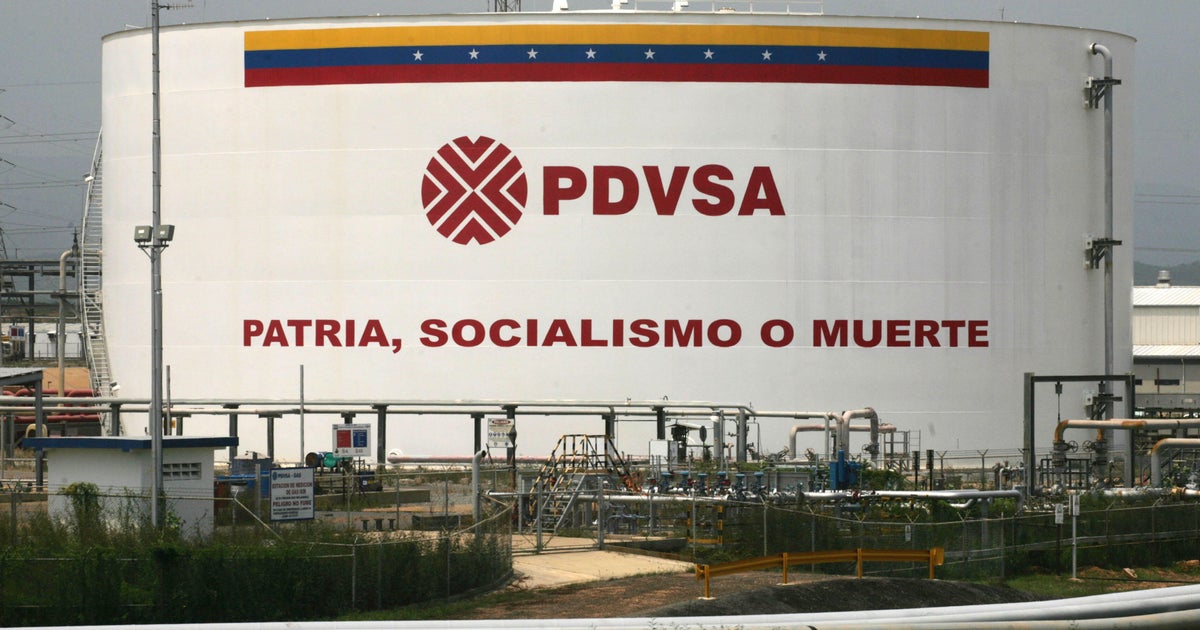
Under former President Joe Biden, the US in 2019 also froze the assets of Venezuela’s state-owned oil company, Petróleos de Venezuela (PDVSA), and banned Americans from doing business with the company.
Recently, the Trump administration has been placed sanctions on four companies and related oil tankers that claim to have ties to the Venezuelan oil sector.
At the beginning of December, Mr. Trump called for a “total and complete embargo” on all authorized oil tankers entering or leaving Venezuela, and the US. he took two bowls with permission.
Chevron could maintain its presence in Venezuela under a waiver offered by the Biden administration through 2022, when the US faces rising energy prices. President Trump extended that special license last year.
How would regime change in Venezuela affect oil prices?
Any significant disruption of global oil supply could increase global energy prices. Yet Venezuela’s limited crude production is likely to mute any immediate impact on oil prices, which were slightly lower in afternoon trade on Saturday, according to FactSet.
US oil prices have fallen sharply in 2025, falling nearly 20% and extending the decline of the past two years. In Friday trading, the price of West Texas Crude (US standard) fell to $57.32 a barrel, down from around $80 in January.
Other factors may limit any short-term impact on household energy prices. US crude production has increased in recent years, helping lower gas prices. The US has also strengthened its Strategic Petroleum Reserve, according to the Energy Information Administration, a possible alternative for consumers and businesses in the volatility of global oil markets.
“Global supply is still adequate, Venezuela’s production represents a small fraction of the global supply and there is no clear evidence yet of a further disruption to the flow,” said Nigel Green, CEO of investment advisory firm deVere Group, in an email.
Meanwhile, the world’s largest economies are growing at a pace that is expected to keep oil prices in check, given the current surplus in crude and ample production capacity at key producers, experts note.
In the short term, the end of the US shutdown could lower oil prices, Monaldi said. “Venezuela was exporting about 800,000 barrels before the embargo. If those come back into the market, that eases the pressure.”
However, a prolonged decline in Venezuela’s oil production could affect other energy costs. For example, this country produces a certain type of grain suitable for making diesel, which is widely used in many industries.
As a result, removing Venezuelan oil from the world market could increase the cost of diesel in the US and increase inflation, according to a recent analysis by the Atlantic Council, a non-partisan group focused on global political and economic issues.
“The relative price impact shows where the barrels are going and how much capacity there is. It doesn’t mean the risk is negligible,” Green said.
Will American companies want to resume operations in Venezuela?
To increase its oil production, Venezuela will need to rely on private investors because its state-owned oil company, PDVSA, is financially vulnerable, Monaldi told CBS News. That would open up an opportunity for US companies to re-enter the market. With the new investment, Venezuela’s existing infrastructure will allow the country to increase oil production quickly, he added.
To be sure, any such investment is likely to depend on political developments following the US strikes and Maduro’s removal, Monaldi said, noting that Venezuela would need to offer trade, financial and contractual incentives to attract American energy producers.
“Venezuela has no restrictions in terms of resources,” he said. “It’s about politics.”
In the short term, Chevron will benefit greatly, given its existing position in Venezuela, according to Monaldi. Other U.S. companies that may return business to Venezuela include ConocoPhillips and Exxon, he added.