Greenland? Colombia? 6 countries where the “Don-roe Doctrine” may take Trump next

[ad_1]
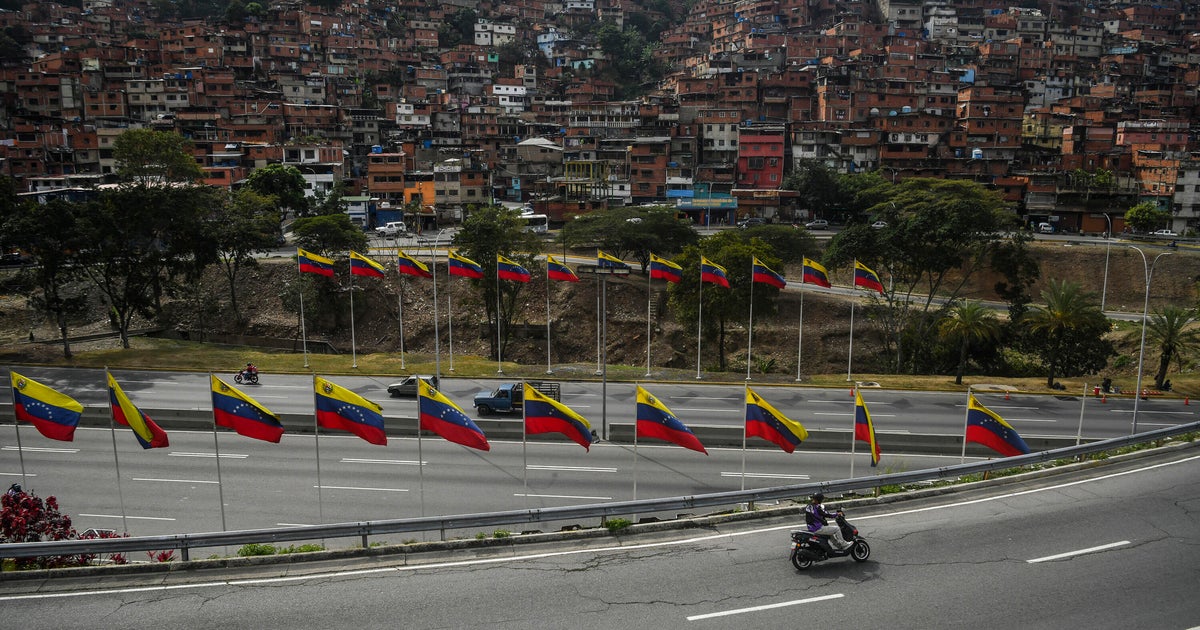
President Trump does not deny that there may be attempts to expand America, intervene or consolidate in the Western Hemisphere after military success in rapture former Venezuelan President Nicolás Maduro from Caracas over the weekend to attend faced drug trafficking charges in the US.
In the past, he threatened to annex Greenland and Canada and predicted that the governments of Cuba and Colombia would fall. Now, Mr. Trump is making similar comments again and raising new questions about what he plans to do next.
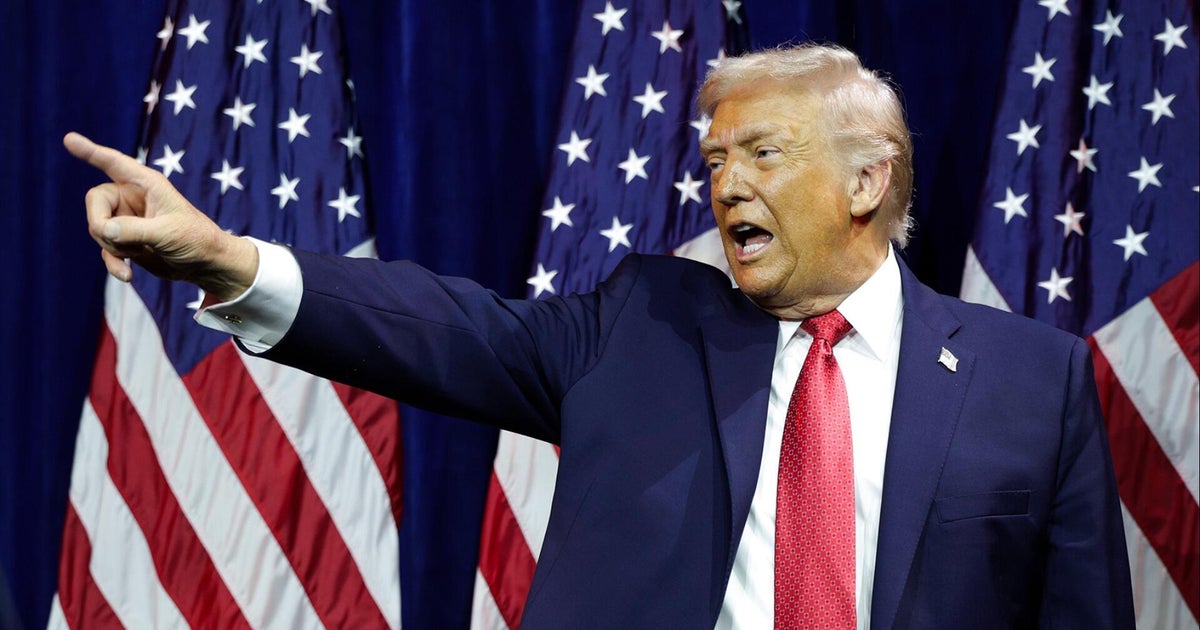
Mr. Trump said on Saturday that under his administration, “American dominance in the Western Hemisphere will not be reversed” – calling his approach the “Don-roe Doctrine,” a spin on the 19th century foreign policy concept.
It is not clear whether the president will follow through on his threats to other countries.
Here is the latest in the countries and regions that the president of these leaders was talking about:
Greenland
Mr. Trump has long coveted Greenland and said it is necessary for US national security, a point he reiterated on Sunday.
“We need Greenland in the context of national security. It is a very good strategy. Currently, Greenland is surrounded by Russian and Chinese ships everywhere,” he said. “We need Greenland, from a national security perspective.”
“Denmark can’t do it, I tell you,” continued Mr. Trump. “In order to strengthen security in Greenland, they added one dog.”
The president also made a name Louisiana Gov. Jeff Landry to serve as special envoy to Greenland last month to represent American interests on the island, which is a sovereign territory of Denmark. Landry said on a social media site addressed to Mr. Trump, “It is an honor to serve in this voluntary capacity to make Greenland part of the US”
In March, Vice President JD Vance he visited Greenland and told a reporter while there that “what we think will happen is that the people of Greenland will choose self-government to be independent from Denmark, and then we will have discussions with the people of Greenland from there.”
The leaders of Denmark and Greenland have repeatedly said that the large Arctic island is not for sale and will decide its own future.
A post on Saturday by Katie Miller, the wife of senior White House aide Stephen Miller, showed Greenland covered in an American flag with the comment “Soon,” prompting some to wonder if its installation was imminent.
Asked by CNN on Monday if he could rule out whether the US would try to take Greenland by force, Stephen Miller said, “There’s no need to think or talk about this in the context you’re asking about – military operations. Nobody is going to fight the United States militarily over the future of Greenland.”
Mr. Trump told reporters on Air Force One over the weekend that while nothing will happen, “we’re going to worry about Greenland in about two months. Let’s talk about Greenland in 20 days.”
Prime Minister of Greenland Jens Frederik Nielsen criticized Mr. Trump in a social media post, calling for proposals to attach “dreams” and writing: “Enough now.”
Tuesday, the European leaders issued a statement saying “therefore security in the Arctic must be achieved jointly, in cooperation with NATO partners including the United States, by supporting the principles of the UN Charter, including sovereignty, territorial integrity and non-violation of borders. These are global principles, and we will not stop defending them.”
Iran
The escalation of protests on top of the dire economic conditions in Iran that have been going on for the past week, and there have been reports that a lot of people have been killed. In response, hours before the start of the operation in Venezuela, Mr. Trump wrote on social media that if Iran “violently kills peaceful protesters, which is their practice, the United States of America will help them.” He said the US is “locked and loaded.”
The president said on Sunday about the protests in Iran, “We are watching it very closely. If they start killing people like they did in the past, I think they will be hit hard by the United States.”
In June, the US did air raids against Iran’s major nuclear facilities, Fordo, Natanz and Isfahan, in an attempt to destroy its nuclear enrichment capabilities.
in Cuba
On the way back to Washington on Sunday, Mr. Trump told reporters, “Cuba looks like it’s ready to fall,” adding that he didn’t know “if they’re going to hold.”
Secretary of State Marco Rubio’s words on Saturday indicated that Cuban leaders should be worried: “If I lived in Havana and was in government, I would be at least a little worried.” A day later, on NBC News’ “Meet the Press,” talking about Cuba, “they’re in big trouble.”
Although he did not elaborate on Cuba’s plans or its leaders, Rubio said, “I don’t think it’s a mystery that we’re not big fans of the Cuban government, as seen by those who supported Maduro.”
Rubio highlighted the close relationship between Venezuela and Cuba, noting that Maduro relied on Cuban security guards for protection and said they were in charge of the Venezuelan government’s “internal intelligence”. The Cuban government said 32 Cubans were killed during the military operation to capture Maduro.
Meanwhile, Mr. Trump seems content to see how things go on the island.
“I don’t think we need action” in Cuba, he said, pointing out that Cuba “now has no income – they got all their money from Venezuela, from Venezuelan oil. They get nothing. And Cuba is really ready to collapse.”
Last year, Cuba’s oil imports from Venezuela fell by 15%, to 27,400 barrels per day, according to Reuters, which also said that Cuba’s supply from Mexico during the same period, from January to October, fell by 73%, to only 5,000 bpd.
in Colombia
The president seems to have lost the patience of the President of Colombia, Gustavo Petro, who accused him of drug production and drug trafficking.
“Colombia is very sick, and it is run by a sick man who likes to make cocaine and sell it to the United States, and he will not do it for a very long time, let me tell you,” Mr. Trump told reporters on Saturday. Asked if he was threatening to launch a military operation in Colombia, the president replied, “Sounds good to me. You know … they kill a lot of people.”
The Trump administration says cocaine production has increased during the presidency of Petro, and Treasury Secretary Scott Bessent. sanctions announced Petro in October because he “allowed drug companies to flourish and refused to give up this job.”
Petro accused the US of violating international law with its attacks on suspected drug-trafficking boats, which have killed at least 115 people, and suggested that innocent people may have been killed in the strikes. The US denies that any innocent people have been killed in any of the boat strikes.
Petro – who was once in a terrorist group – warned Mr. Trump for taking action in his country, writing in X that “he swore he would never touch a weapon again,” but “in the country I will take weapons I don’t want.”
Canada
When Mr. Trump has spoken making Canada the “51st country,” he did not reveal it again since Venezuela was active.
But Mr. Trump has imposed punitive tariffs against Canada, raising tariffs to 35% in August, although most of the goods are exempt because they are covered by the 2020 US-Mexico-Canada Trade Agreement.
In October, Mr. Trump threatened to end trade talks with Canada after an anti-tariff ad using Ronald Reagan’s voice in Ontario. Ontario Premier Doug Ford pulled the ad, saying “our goal was always to start a conversation about the kind of economy Americans want to build and the impact of the tax on workers and businesses.”
The Panama Canal
Mr. Trump has suggested earlier in his term that the US should regain control of the Panama Canal – which is struggling. Government of Panama. The US oversaw the construction of the canal in the early 20th century and controlled it for decades, but began returning the canal and surrounding land to Panama in 1979.
He said in March he was “taking back the Panama Canal,” referring to the deal is a US-led consortium to buy a controlling stake in a company that operates ports along the canal. President of Panama the suspect Mr. Trump for “lying again.”
What is the Monroe Doctrine?
In 1823, the fifth president of the United States, James Monroe, put before Congress the policy of the US regarding its neighbors in the Western Hemisphere. It was originally intended to end European colonialism, but the Monroe administration wanted to increase US influence and trade alliances.
During the Cold War, the US cited the Monroe Doctrine to be used as a defense against the spread of communism in Latin America.
The phrase “Don-roe Doctrine” first appeared on the cover of the New York Post last year.